The 1932 sculpted image being at the side means that we respect our earlier understanding of the Trinity as well as the devotion that accompanies it, but that the new sanctuary demonstrates the less figurative, less pictorial understanding of the Trinity that we are aiming for.
In 1932, we thought perhaps that we could contain our understanding of the Holy Trinity in a statue, a sculpted image. But we've realized since then that the Holy Trinity is a mystery far vaster, far richer, far deeper than that.
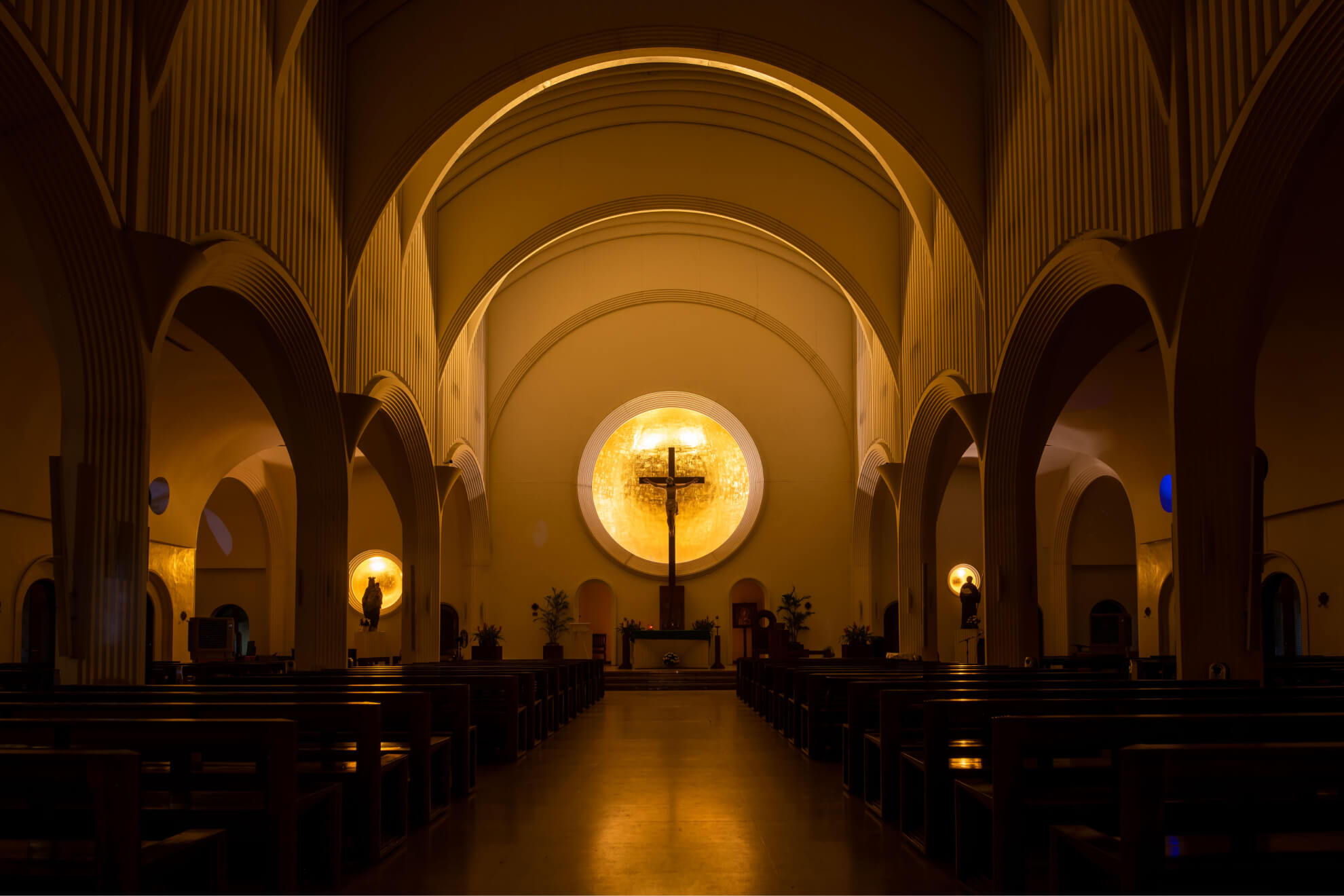
This less figurative, less pictorial understanding of the Trinity also underscores the simplicity of the design, and the essential quality of all the elements that are in it. The various components serve not just their pragmatic intents but also their metaphoric ones.
The three curved walls, ascending in height, demarcate the front of the sanctuary from the back while maintaining an over-all spatial wholeness of the sanctuary. The sanctuary wall is textured whereas the rest of the walls of the nave are plain, to highlight the importance of the events happening in the sanctuary while serving an acoustically beneficial role. The spacing of the vertical grooves of the sanctuary wall varies, giving the illusion of undulation or the fall of fabric, to suggest the sanctuary wall as a kind of curtain, parting to reveal the Holy of Holies within.